Stale Data, Confident Decisions. The Case for Research Expiration Dates.
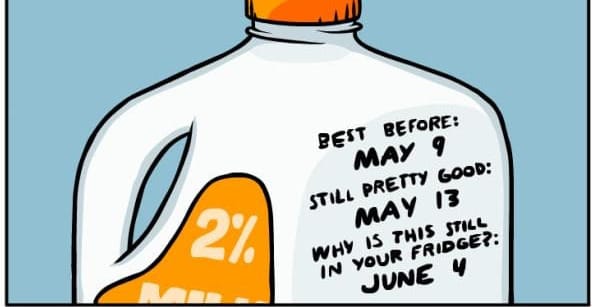
There is a file somewhere in your organization called something like User Needs 2022 or Core Insights Synthesis or, if someone was feeling ambitious, Foundational Research Report Q3. It lives in Confluence. Or Notion. Or a shared drive folder with subfolders that someone organized carefully and nobody has touched since.
Your team treats it like scripture.
It is a photograph. Photographs age. The people in them do not stay the way they were.
The Photograph on the Wall
We act like research findings accumulate. Like the repository is a library that keeps growing, each study adding to a stable body of knowledge the organization can draw on indefinitely.
What actually happens is that you capture a moment. Twelve users, or forty, or two hundred. Their mental models, their frustrations, their stated priorities, their behavior inside a product that may look nothing like the product you have now. You document it. It goes into the system. And then, slowly, invisibly, the moment passes and the documentation stays.
The users you studied in 2021 have different jobs. Different financial pressure. Different expectations shaped by two years of competitive exposure to products yours is being compared against. The context evaporated. They changed. The photograph did not.
Your team is still pointing at it.
Not All Data Rots at the Same Speed
This is the distinction nobody makes explicitly, and it matters more than almost anything else in how you manage a research program.
Behavioral findings at the task level decay fast. How users navigate a flow, where they drop off, what they misread or ignore, all of it has a shelf life measured in months, not years. Interfaces change. User expectations get recalibrated by every other product they touch. A navigation finding from eighteen months ago is almost certainly describing something that no longer exists in quite the same form.
Attitudinal data is worse. What users say they want, what they say they value, what frustrates them, this is the most context-dependent signal you can collect and the most likely to be enshrined. People's stated preferences are sensitive to framing, to mood, to the cultural and economic moment they were living in when you asked. An attitudinal finding has a shorter half-life than a behavioral one. Most repositories treat them identically.
Deep motivations hold longest. Why someone wants to feel financially stable is more durable than how they feel about your budgeting feature this quarter. The closer a finding is to something fundamental about being a person, the longer it stays useful. The closer it is to product-specific behavior or stated preference, the faster it expires.
I think about this when I see teams defending product decisions by citing research that is two years old and fundamentally attitudinal. The citations are real. The confidence is misplaced.
The World Moved and Your Data Didn't
Pull up your oldest foundational research. Check when it was fielded.
Let's do a quick thought experiment. Say you have willingness-to-pay data from 2024. Seems recent. It is two years old. Now think about what happened in those two years. Sweeping tariffs. A trade war that touched nearly every import category. Conflict in the Middle East pushing energy costs. A domestic economy that has made a lot of people feel like discretionary spending is genuinely risky in a way it did not feel in 2024.
The users who told you what they were willing to pay made that calculation inside a specific economic reality. That reality has shifted considerably. The number they gave you was honest. It was just honest about a moment that no longer exists.
Your 2024 willingness-to-pay data is now a photograph of how people felt about spending money before things got noticeably worse. It is sitting in your repository looking like current evidence. Someone is probably citing it in a pricing discussion right now.
Macro environment is the most visceral example right now because the economic shift has been hard to miss. But it is not the only accelerant and in some organizations it is not even the fastest one.
Product change works just as fast. A team studies a checkout flow, documents the findings, ships them to the repository. Six months later the flow gets redesigned. The findings stay. Nobody retags them. Nobody marks them as describing a version of the product that no longer exists. Two years later a PM pulls the research to understand checkout behavior and reads findings about a screen their users have never seen.
Competitive exposure works slower but compounds quietly. Users' expectations get recalibrated by every other product they touch. What felt intuitive or generous in your product two years ago may feel dated now because something else shipped and reset what people consider normal. The findings about what users expect from onboarding, from pricing transparency, from notifications, were formed against a competitive landscape that has since moved.
And then there is user base composition. If your product grew significantly, entered a new segment, or expanded geographically, your current users may be a materially different population than the ones you studied. Not because people changed. Because who is using you changed. Findings that were accurate for your early adopters may now describe a population that is a minority of your actual base.
Any one of these is enough to expire a finding. Most products are dealing with all of them simultaneously and tracking none of them.
The Telephone Game Nobody Admits Is Happening
A researcher runs a study. The findings go into a document. The document gets shared. A PM reads it and internalizes three points. Those three points appear in a strategy memo. New hires read the memo. They do not go back to the original document. They absorb the three points as things the organization knows.
Two years later, nobody knows where the three points came from. They have been repeated enough times by enough people that they feel like common knowledge. The provenance is gone. What remains is the assumption, confident and unquestioned, shaping decisions that nobody connects back to twelve interviews conducted when the product looked different and the economy looked different and the users were in a different place in their lives.
This is how research becomes mythology. Not through anyone doing anything wrong. Through turnover, through abstraction, through the way organizations transmit knowledge without preserving what the knowledge was based on or when.
When Good Findings Go Bad
The most dangerous finding in your repository is probably one that was right.
It got absorbed. It shaped real product decisions. It held up under scrutiny at the time. And then the conditions that made it true quietly shifted and nobody scheduled a moment to ask whether it still applied.
Teams do this with legitimate insights. Users do not trust automated recommendations. Users prioritize price over convenience at this segment. Onboarding is the biggest friction point. These were real. They held up. They shaped real decisions appropriately.
And then they calcified.
The team stopped asking whether they were still true because they had already asked and gotten the answer. New research that complicated the picture got explained away. We found that trust in recommendations is higher now, but that is probably a segment effect. The prior belief became a filter on what new evidence was allowed to say. The research had stopped being a learning tool and become something closer to a defense mechanism.
I am not sure this is fully avoidable. Organizations develop heuristics. Heuristics solidify. Maybe that is fine in some cases. But there is a difference between a heuristic that gets periodically stress-tested and one that is never questioned because questioning it would require someone to admit that the work done two years ago might not apply anymore. Teams are rarely honest about which side of it they are on.
What a Shelf Life Would Actually Look Like
Research repositories need expiration dates. Not arbitrary ones. Calibrated to the type of finding, the velocity of the market, and the rate at which the product itself is changing.
A behavioral finding in a fast-moving consumer product might have a six-month useful life. An attitudinal finding in a volatile economic environment might be stale in ninety days. A deep motivational insight about why people want financial security might survive three years before it needs revalidation. The point is not to standardize the interval. The point is to make the decay visible instead of pretending it is not happening.
Any finding fielded before a significant macro shift, a major product change, or a competitive disruption in the category should be treated as expired regardless of how old it technically is. The calendar date is not the right variable. The question is whether the conditions that made the finding true still exist.
When you present old research, name the vintage. This is from eighteen months ago. Here is what has changed. Here is how confident I am that it holds. That framing is not hedging. It is giving people the information they need to weight what you are telling them, which is usually something they want and rarely something they get.
How You Actually Retire a Finding
Most repositories have no process for this. Things go in. Nothing comes out. The Confluence page from 2020 sits next to the study from last quarter and both look like knowledge.
Retirement does not mean deletion. It means a finding leaves active circulation with a reason attached. It stops being citable as current understanding. It becomes archaeological record, useful for context, not for decisions.
The mechanics are not the hard part. Every finding gets a type and a filed date. The type determines the default review window.
- Behavioral findings in a fast-moving product, six months.
- Attitudinal findings in a volatile market, ninety days.
- Deep motivational findings, longer, but not indefinitely.
When something hits the window it gets one of three dispositions: still holds, needs revalidation before further use, or retired. Retired findings get a note. What changed. Why this no longer reflects current understanding. Who made the call.
I have seen teams resist this because retiring a finding feels like admitting the research was wasted. It was not wasted. It was true at the time. Time moved. That is not a failure of the research. It is just how knowledge works in a context that keeps changing.
There also has to be a norm around citing retired research. If you use it, you flag it. Same as flagging a study with a small sample or a non-representative recruit. The finding can still inform intuition. It cannot anchor a decision without disclosure.
Why None of This Works Without the Frame
Expiration management sounds like a documentation problem. Tag your findings, set your windows, run your reviews. It runs deeper than that. Documentation solutions to governance problems produce very organized graveyards.
The reason staleness compounds unchecked in most organizations is that nobody is accountable for the question of whether what the org believes about its users is still true. Research gets produced. Research gets stored. Nobody owns the belief system that the research is supposed to maintain.
I have been calling that belief system the frame. The organization's accumulated, actively maintained model of its users, with a named steward whose job includes knowing what the org currently believes, where coverage is thin, and where confidence has outrun the evidence. Repositories are where findings go to be stored. The frame is where someone is accountable for deciding when they should stop being believed.
That accountability is harder to build than it sounds. Somebody has to run the review. Not as a favor. Not when a sprint is light. It needs to be in someone's job description with protected time attached, which almost never happens in practice. Without it, the review cadence lasts one quarter and quietly disappears because a PM needed something by Thursday.
Without that structure, you can implement every tagging convention in this piece and it will hold for a quarter. Then the steward gets pulled onto something urgent and the reviews slip and eighteen months later you are back to a flat archive with no signal about what is still true.
🎯 If this resonated, subscribe to The Voice of User. One essay a week. No fluff. No spam. Just the things the rest of the field is too polite to say out loud.