Question: Is Junior UXR Worth It Anymore?
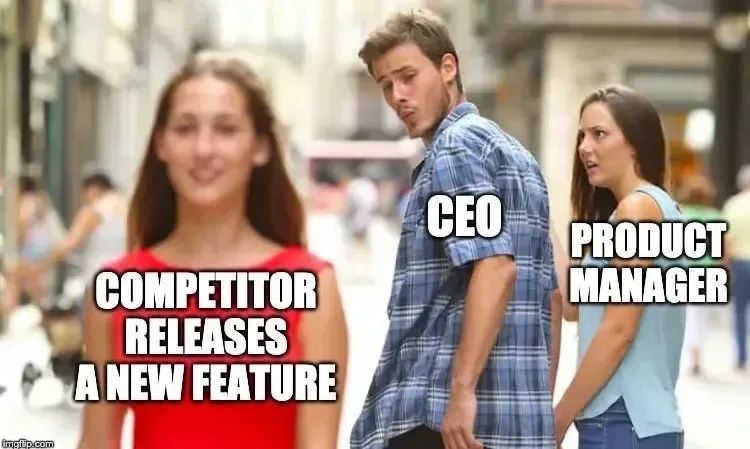
Someone asked me last week whether they should take a UXR or PM internship. They had both offers. People around them were saying take PM, UXR is a mess. They wanted a second opinion.
I gave them the same answer. Take PM.
But the more interesting question is why, and the why is not about the internship.
Junior UXR as a career entry point is in worse shape than most people in the industry are willing to say directly. Not "competitive market" bad. The roles that used to exist, associate researcher, junior researcher, research coordinator that was not secretly just scheduling, many of those are gone or have been hollowed out into something that does not actually build research skills. What remains is thinner, more competitive, and concentrated in companies that mostly want someone to run studies, not develop into someone who can lead them.
This has been building for a few years. The post-2022 layoffs hit research disproportionately hard and the recovery has been uneven. Senior roles came back faster. Junior roles, in a lot of places, just did not.
Here is a signal worth paying attention to. There is a hiring order that most organizations follow when standing up a new product area. Engineering first. Then PM. Then design. Then UXR, if the budget survives that long. That order is not arbitrary. It reflects what the organization considers load-bearing. Research sits at the end of the queue because it is still understood as a support function (i.e. overhead) in most places, not a core one. That has always been a problem. Right now it is an acute one.
AI has made this worse in a specific way, and I want to be precise about how because the lazy version of this argument is wrong. These tools are not replacing research. They are augmenting what experienced researchers can do. My own output this year is up 30 to 40 percent based on metrics I actually track.
That productivity gain is good for research as a function. It is bad for junior headcount. When a small number of senior researchers with good tooling can cover the scope that used to require a larger team, the business case for hiring and developing junior people gets harder to make. I have been in enough planning conversations to know how that calculation ends.
And it is not just interns having this conversation. There is a thread going around on the UXR subreddit right now from a 10-year researcher, someone who loves the work, who is seriously considering taking a PM offer from a former employer. Not because they want to be a PM. Because they are not sure the field is stable enough to bet another decade on. That is a different kind of signal than an intern hedging their options. That is someone with serious skin in the game doing the math and coming up uncertain.
Which brings me back to the internship.
PM has infrastructure that junior UXR currently does not. Clearer promotion criteria, more established conversion pipelines from intern to full time, hiring patterns that are less exposed to the current restructuring. If you do well in a PM internship the next step is legible. In junior UXR right now it often is not.
I also think the PM path makes you a better researcher eventually, if that is still where you want to end up. You learn how product decisions actually get made, what the people commissioning research are actually trying to answer, and where findings go to die. That is not nothing. It is probably more useful than another semester of affinity diagramming.
Maybe junior UXR stabilizes. Maybe companies rebuild those pipelines as the tooling matures and teams figure out what the right ratio of senior to junior actually looks like with AI in the mix. I do not know. I am not sure anyone does yet.
What I do know is that right now, as a general answer to a general question, PM is the cleaner bet.
If you have a question you want me to answer on the blog, send it to me.
🎯 If this is the kind of thing you want to read once or twice a week, subscribe to The Voice of User. No fluff. No PR. Just the things the rest of the field is too polite to say.